More Precision, More Effectiveness, More Safety – New Tools in the Fight Against Cancer
In September 2024, the NanoSanguis S.A. research team began work on the project Dextran Conjugates for Targeted Anticancer Therapy (2024/ABM/05/KPO/KPOD.07.07-IW.07-0249/24), co-funded by the Medical Research Agency (ABM). The aim of the project is to develop an advanced drug delivery system that will enable more effective and safer treatment of cancer.
Why Are New Solutions Needed?
Although currently used systemic chemotherapy is effective in treating cancer, it is associated with numerous adverse effects. Cytotoxic drugs destroy not only cancer cells but also healthy tissues. This lack of selectivity is responsible for adverse effects, including damage to internal organs such as the heart.
In response to these limitations, scientists are developing new chemotherapy strategies.
Their aim is to design a drug that acts primarily on cancer cells within a tumour while minimising its impact on healthy cells. The project carried out by NanoSanguis S.A. is part of this emerging field of modern medicine.
What Makes the Approach Innovative?
The solution under development is based on so-called drug conjugates. In practice, this involves combining three components into a single structure:
- a cytotoxic drug,
- a carrier – in this case, dextran, a well-characterised polysaccharide with an established safety profile,
- a targeting agent that directs the molecule towards cancer cells.
The resulting conjugate acts like a precisely programmed delivery system. It remains stable under physiological conditions, such as those found in the bloodstream, while releasing the active substance within the specific microenvironment of a tumour. This allows the drug to reach the site where it is most needed, potentially reducing the risk of damage to healthy tissues.
Co udało się już osiągnąć?
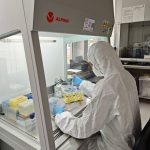
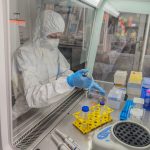
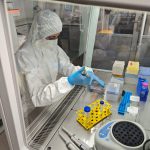
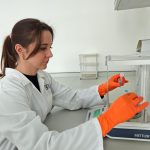
Key research tasks have been completed during the earlier stages of the project. The team developed and optimised a synthesis process for dextran conjugates containing both the drug and the targeting agent. This was followed by detailed chemical and analytical characterisation.
In parallel, a broad range of biological studies was conducted in vitro. These included:
- assessing the binding of the conjugates to cancer cells,
- analysing their ability to enter cells, including the cell nucleus, using microscopy techniques,
- investigating drug-release kinetics,
- evaluating cytotoxic activity, i.e. the ability to destroy cancer cells.
The results obtained confirmed the expected properties of the formulations developed and enabled the planned milestones for the initial stages of the project to be achieved. On this basis, lead conjugates were selected for further, more in-depth preclinical evaluation.
The Next Step – In Vivo Studies
The project is now entering a pivotal phase. Preparations are under way for in vivo studies in an animal model. Their objectives will include determining the maximum tolerated dose (MTD) and conducting an initial assessment of the safety profiles of the selected conjugates.
This is a crucial stage that will help establish whether the promising results obtained in laboratory studies can translate into efficacy and safety in a more complex biological system.
Outlook
The results achieved to date support the rationale behind the adopted research strategy. The dextran conjugates under development show potential as an advanced system for the targeted delivery of anticancer drugs. If the subsequent stages of research are successful, this approach could ultimately help improve treatment efficacy while reducing adverse effects.

The project demonstrates how combining expertise in chemistry, biology and medicine can lead to innovative technologies that address patients’ real-world needs.