NanoGroup at the 17th Congress of the Polish Transplantation Society – NanOX Technology at the Centre of Discussions on the Future of Organ Perfusion
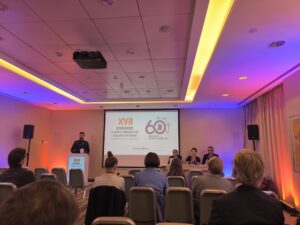
The 17th Congress of the Polish Transplantation Society took place in Warsaw on 10–12 September 2026, bringing together experts in clinical and experimental transplantation. The event was attended by the NanoSanguis S.A. team, a member of the NanoGroup, which presented its ongoing development of ex vivo machine perfusion technology for organs.
Participation in the congress marked an important milestone in communicating the progress of the technology, which comprises the NanOX Recovery Box, the NanOX 4 Kidney perfusion solution and dedicated perfusion protocols.
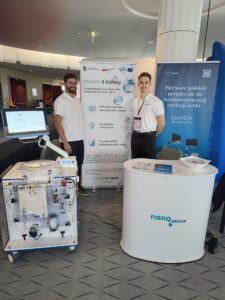
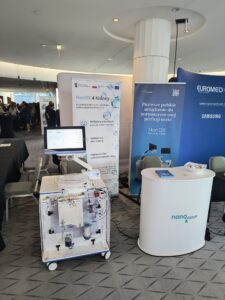
NanOX Recovery Box – A Device for Ex Vivo Organ Perfusion
One of the key elements of NanoSanguis’s presence at the congress was the presentation of its proprietary NanOX Recovery Box device, designed to enable controlled ex vivo organ perfusion.
The device supports perfusion across a broad temperature range, from 4°C to 37°C, allowing the use of hypothermic, subnormothermic and normothermic perfusion protocols.
The system was designed to monitor key perfusion and organ function parameters, including pressure, flow, oxygenation, pH, temperature, metabolic parameters and urine production.
The second technology presented at the congress was NanOX 4 Kidney, the world’s first perfusion solution to use a synthetic respiratory gas carrier based on perfluorinated compounds.
The NanOX System concept involves developing each component as a fully independent product solution while also integrating the device, perfusion solution and dedicated perfusion protocol into a comprehensive system. This enables control over the conditions in which an organ is maintained outside the body.
Addressing the Challenges Associated with DCD and ECD
One of the greatest challenges facing modern transplantation is the limited availability of organs for transplantation.
In this context, particular importance is attached to organs from donors after circulatory death (DCD) and expanded criteria donors (ECD).
Organs from these donor groups may be more compromised and, when assessed using currently available solutions on the market, may not qualify for transplantation.
The ex vivo machine perfusion technology developed by NanoGroup offers the possibility of actively monitoring an organ outside the body. At subnormothermic and normothermic temperatures, it also enables the organ’s metabolic activity to be maintained.
This is intended not only to support organ preservation but also to establish controlled conditions for functional assessment, maintenance of organ function and support for regenerative processes before transplantation.
FIVE PRESENTATIONS BY THE NANOSANGUIS TEAM
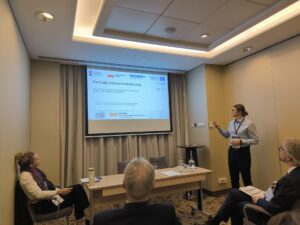
At the 17th Congress of the Polish Transplantation Society, the NanoSanguis team presented five research projects relating to the development of its technology.
Kidney Autotransplantation in a Large-Animal Model
Natalia Dziewa presented a study describing the development of a porcine kidney autotransplantation model.
The model involves controlled induction of warm ischaemia, a kidney preservation phase and subsequent reimplantation of the organ into the same animal.
Following removal of the contralateral kidney, the function of the transplanted organ can be monitored, among other methods, through blood biochemical parameters over a 14-day observation period.
Developing a reproducible autotransplantation model is an important milestone in transplantation research. It enables the transition from assessing an isolated organ to evaluating its function following reimplantation.
NanOX 4 Kidney in Subnormothermic Perfusion of Rat Kidneys
Julia Zakrzewska-Borzęcka presented research findings on the subnormothermic perfusion of isolated rat kidneys following 30 minutes of warm ischaemia.
Perfusion at 25°C using NanOX 4 Kidney was compared with standard hypothermic machine perfusion using Belzer MPS.
Kidneys perfused with NanOX 4 Kidney demonstrated higher oxygen consumption, lower lactate concentrations and a more favourable energy profile.
Urine production was observed in 7 out of 10 kidneys studied. Histopathological analysis also indicated a more favourable tissue injury profile compared with the hypothermically perfused group.
Perfusion of Porcine Kidney Following Prolonged Warm Ischaemia
Marcin Dymkowski presented research findings on subnormothermic perfusion using NanOX 4 Kidney in isolated porcine kidneys.
In the experimental group, kidneys were subjected to an average of 25 minutes of warm ischaemia, followed by a 12-hour perfusion protocol comprising gradual warming, eight hours of perfusion at 25°C and subsequent cooling.
Despite a substantially greater ischaemic burden, subsequent reperfusion yielded comparable flow parameters, vascular resistance, oxygen consumption and levels of the analysed injury markers relative to kidneys retrieved without a period of warm ischaemia.
At the same time, significantly higher urine production was observed.
Approximately 30 Hours of Porcine Kidney Perfusion
Kornel Prystupiuk presented research findings involving approximately 30 hours of porcine kidney perfusion under subnormothermic or normothermic conditions.
The studied organs had previously been subjected to 30–40 minutes of warm ischaemia. Both experimental groups received NanOX 4 Kidney containing a synthetic oxygen carrier. The control group consisted of kidneys preserved using static hypothermic storage with Belzer UW solution and subjected to 2–3 minutes of warm ischaemia.
During reperfusion, the kidneys maintained flow, vascular resistance and metabolic parameters comparable to those of the control group.
At the same time, both temperature strategies demonstrated higher urine output without a significant increase in the organ injury markers analysed.
The NanOX System – From Concept to Autotransplantation Studies
During the “Innovations in Transplantation” session, Wojciech Frąckowiak presented a comprehensive overview of the development of the NanOX System.
The presentation traced the project’s progress from identifying the clinical need, through technology development, to the results obtained at successive stages of research.
The NanOX System was presented as an integrated combination of three components:
NanOX 4 Kidney + NanOX Recovery Box + Dedicated Perfusion Strategy
Studies using isolated porcine kidneys examined, among other factors, the effects of subnormothermic and normothermic perfusion on haemodynamic parameters, metabolism and organ function.
Despite substantially longer periods of warm ischaemia in the experimental groups, subsequent reperfusion yielded flow, vascular resistance and oxygen consumption parameters comparable to those of the control group. Higher urine output was also observed, without a significant increase in injury markers such as lactate dehydrogenase (LDH) and aspartate aminotransferase (AST).
First Autotransplantation Experiment
One of the most important elements of the presentation was the demonstration of an autotransplantation experiment using the NanOX System.
Following 30 minutes of warm ischaemia, a porcine kidney underwent 12 hours of perfusion using the NanOX Recovery Box and NanOX 4 Kidney solution at a subnormothermic temperature of 25°C. The organ was then reimplanted into the same animal, serving as its sole functioning kidney.
The animal reached the planned 14-day endpoint, and the monitored parameters reached reference levels by the eighth postoperative day.
Dialogue with Clinicians and the Scientific Community
Participation in the congress also provided an opportunity for direct dialogue with potential users of the technology.
Discussions with transplant surgeons, nephrologists, cardiac surgeons and transplant coordinators provided an opportunity to present the NanOX Recovery Box, the ergonomics of its user interface, cannulation protocols and the potential for integrating the device into clinical procedures.
An important part of the event also involved discussions with representatives of the University Medical Center Groningen, which confirmed the potential of the NanOX Recovery Box as a platform that could be used not only in future clinical procedures but also in research on machine perfusion of organs.
The presence of companies developing competing solutions, including Aferetica, Organ Recovery Systems and XVIVO, created additional opportunities to exchange experience and discuss future directions in machine perfusion technology.
Summary
For NanoSanguis, the 17th Congress of the Polish Transplantation Society was an important milestone in presenting the progress of the NanOX System, from its technological concept to a fully developed product, to a broad audience of specialists and actual users of this type of solution.